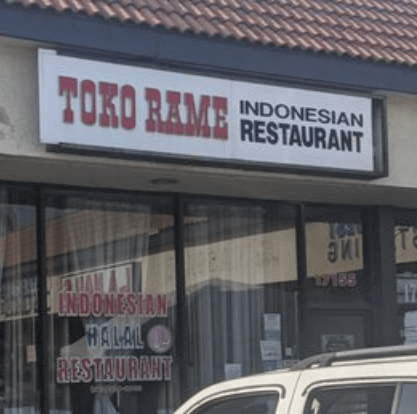
Toko Rame: One of Asia’s Last Undiscovered Cuisines
Growing up as an Asian American in Atlanta, Georgia disconnected me from my Indonesian heritage. Once I moved to California, owning my family restaurant over the last 12 years connected me to the importance that a restaurant can serve for its community. 27 years ago, Toko Rame Indonesian restaurant opened its doors in Bellflower, California. Asian food, let alone Indonesian food, do not have deep roots in American culture. Toko Rame served as a hub for the community, where generations of immigrants and locals shared dishes of my family heritage. I have come to realize the difficulty and complexity that Asian American restaurants have faced in the United States. Asian restaurants first arrived in America in San Francisco in the form of Chinese-American food. A century and a half later, Indonesian food is one of Asia’s last undiscovered cuisines. I will delve into the history of Asian American restaurants in the United States, Toko Rame’s ownership and history, and the struggles of my Asian American restaurant in modern times.
Asian American Restaurants as Hubs
The story of Toko Rame in Los Angeles represents the larger influence of Asian culture in contributing to American food culture. Alice McLean in “Asian American Food Culture” highlighted “From the Chinese laundries that offered rice bowls to hungry laborers in the 1800s to the sushi bars and pho shops that have proliferated in recent years, Asian Americans have been a vital part of the restaurant industry in the United States.” Asian restaurants and Toko Rame alike, would become essential building blocks for communities and cultural exchange. Asian immigrant communities from early Chinese immigrants to the Indonesian Diaspora would utilize these hubs. Restaurants would cater to the immigrant population and other Americans as well. Early Chinese Restaurants would help adapt American taste with chow mein and chop suey, adjusting the American palate. Early non – Asian, Chinese food adopters aided the proliferation of a larger diverse food scene across America. Beyond impacting just the flavor palettes of Americans, the growth of Chinese restaurants pioneered opportunities for Asian family run restaurants like later Thai and Indian restaurants and even Toko Rame.
I connect this with Toko Rame’s influence within the Bellflower community. Toko Rame would become a testament of Asian American restaurants throughout American history as a cultural exchange point. Because the local Bellflower community was predominantly hispanic, they would typically go to the local taco joint next door. Despite this, the restaurant would attract a variety of hispanic and African Americans searching for a quick bite who were from the local neighborhoods. I would get to know regulars of the community and even sell our food saying “we are like Chinese and Indian food” , as it was something they would be most familiar with.
We’d also cater to much of the local Dutch Indo community. The Bellflower area and South East Los Angeles served as the largest concentration of Dutch immigrants in California. Their immigration peaked after World War 2 because of Dutch immigrants leaving economically depressed Europe and others who left Dutch Indonesia after it won its independence after the war. (LA times) Many of the Dutch maintained control of dairy farms that sprawled the local area with about 100,000 residents. This contributed to one of LAs only local Dutch grocery stores located in Bellflower. Many of these Dutch Indo customers who visited the Dutch store would become accustomed to the taste of home at Toko Rame. One of the biggest reasons we were able to survive during covid was because of the elderly Dutch from this past era.
This is alongside the diverse Indonesian and Arab-muslim peoples that would come from all across LA. Toko Rame Halal Indonesian restaurant was truly unique to Los Angeles because it was muslim owned. Other predominant Indonesian restaurants in LA were influenced by Chinese Indonesians who’d have Indonesian street food which only included pork. Toko Rame on the other hand was a halal restaurant. Anaheim, California had a huge muslim immigrant community that would spread word of mouth about Toko Rame through mosques and the local community. Toko Rame would establish a space as a cultural melting pot. Continuing from McLean, “For many Asian Americans, restaurants have served as a gateway to the larger society, providing a space to showcase their cuisine, build networks, and establish a presence in their adopted country”
History of Toko Rame
Toko Rame’s story begins with the Usman family’s immigration process. My Mom’s family came to the United States in 1992. Because the immigration lottery process required her family to own a business to establish permanent residence, her father, Abdul Usman, whom I called Aki, began to try a variety of businesses from cleaning services to the restaurant industry. They had wanted to have permanent residence so my Mom could have support while looking for a school. The family had relatives spread across California so her immigrant parents thought it would be best for my Mom to get an American college education. And since they arrived, she was waiting to enroll into San Diego State University (SDSU).
They immigrated first to Monterey, California to wait during the green card lottery program. The program was a lottery and allowed up to ten applications a day for two weeks. Aki’s name fortunately got picked from the lottery, forcing him to begin his American entrepreneurial journey. Aki accumulated his wealth as a private lawyer back in Indonesia; therefore he did not have manual labor experience for many of the investments that he’d make. He began by buying shares in an Indian couple’s Travel Agency. Through the agency, he was able to qualify for the green card. The business wasn’t too successful so he quickly sold it to seek other opportunities. Afterwards, he purchased a carpet steaming and restoration company. Due to a lack of labor experience and connections, he again left the business after a short time.
To better prepare for SDSU, my Mom took English classes at Monterey Peninsula College during this time. In Monterey, she met my dad. They fell in love, she got married, and in less than a year, she transferred to UGA in Georgia. Simultaneously, Aki had decided that Monterrey did not have the right opportunities and always wanted to own a restaurant in Los Angeles. Toko Rame in Bellflower, California, was a Chinese Indonesian store that was up for sale. He quickly purchased Toko Rame and slowly converted it into the family owned restaurant that it is today.
When they first bought the restaurant in 1995, my grandmother Ernita and aunt Vera, whom I call Oma and Bunda, worked alongside the former Chef to run the restaurant. The cooking style at the time was completely different, with Chinese Indonesian street food influences that included pork. My family was from Padang on the island of Sumatra. They wanted to change to Padang style food which included heavier spices and the use of coconut milk. The kitchen would bring famous dishes including Gordon Ramsey’s number one food in the world, Beef Rendang. They also brought other dishes like beef and chicken curry, different chili styles like sambal terasi and sambal balado, and delicious oxtail soup. To even have all the right spices for the original menu with 186 dishes, her parents flew home twice a year filling three luggages worth of spices to bring back each time. Although the restaurant was able to run under the management and chefs of Oma and Bunda, they also needed to recruit a real Indonesian chef for the kitchen. On these trips, her parents would bring family relatives Saadah and Idar, sisters, from Jakarta. Her parents would purchase a house in Cerritos where all the family members and chefs would continue to live together for the next few years.
Oma and Aki soon moved back to Indonesia to run his old lawyer business again, leaving the sole responsibility of the business on my aunt Bunda. Om Eri, my uncle, would move to the United States and go to college at Cal State University, Fullerton (CSUF) alongside joining her to help run the business with Bunda and the new chefs. After running the business for the next 15 years until 2010, Bunda would decide that she wanted to pursue something else in life and become a teacher.
At the time it was the 2008 Great Recession and my Mom would be laid off from her career as an interior designer at HomeDepot in Atlanta, Georgia. Her parents offered her the business to run if she wanted to move to California. The big shift in my life came with this sudden move to California. It was difficult for my Mom because she had no restaurant or Indonesian cooking experience whatsoever. She would rely heavily on Saadah and Edar to help as much as possible during this transition period. This dependent reliance would lead to the falling out of Chef Edar as my Mom would change how the culture of Toko Rame would be run. Her parents would also decide that she would become the new manager so that Bunda could move on from the restaurant.
Having been away from Indonesia since she was in high school and not having any Indonesian connections since she lived in Georgia for so long, my Mom experienced a culture shock moving back to LA. She had to connect with the Indonesian community for the first time in many years. She’d also have to quickly learn to do the grocery shopping and cooking so her Mom did not have to continue to do the long distance travel as she got older.
For the first couple of years, the business was able to run smoothly until her main chef Saadah got ovarian cancer. Since she relied so heavily on both of the chefs for so long, Edar now took most of the pressure demanded as the chef for the restaurant. Edar soon decided to quit. She had lost both her chefs. Without proper Indonesian connections, she was forced to close the restaurant for the first time in its existence for two weeks. During the closing, she learned how to cook everything while Saadah was recovering from cancer treatment. Saadah was able to teach my Mom from the side by writing down the entire menu. Two weeks later, Toko Rame would open with all American chefs. Saadah would watch on the side and teach how to cook to four new American chefs brought in by my Mom to help.
The customers would return but reacted very picky as the food did not taste the same anymore. Alongside the difference in food, my Mom could no longer be the face of Toko Rame as she cooked in the back and could not greet and serve customers anymore. Due to this, many Indonesian customers left because the food tasted different and it looked as if there were new owners because of the new staff.
At the time, my Mom worked tirelessly to build a new relationship with the Indonesian Consulate in Los Angeles where they would help to build business by catering all their biggest events. She’d cater Eid Mubarak several times which demanded over 1000 meals alongside other Long Beach events hosted by the Indonesian community.
In 2016, Toko Rame caught its first big break. The restaurant was featured on the Cooking Network show, The Culinary Adventures of Baron Ambrosia. The show would help bring life to the restaurant with new customers alongside a feature on ABC LA. Each show featured our original Nasi Bungkus and famous peanut sauce specialities. These would bring in flocks of customers and allow us to have a presence across the nation. My mom would be able to freeze and dry-ship food and peanut sauce across the country to customers from Seattle to New York. Business was finally good. With the help of seven employees and Saadah recovering to 100%, the restaurant would climb the culinary ranks with many great reviews on Yelp.
My Toko Rame Story
My storyline begins in 2016 as well. Our main busser Jose would begin to need hours off on the weekends and I was coming to the age to gain more responsibility. My Dad just bought me my first car and I would need some cash to pay for gas. I began working at Toko Rame at 16 years old. I started from the very bottom as a busser and dishwasher and would spend my Saturdays working alongside my Mom for six hours a weekend. I would come to realize that money wasn’t free and how hard my Mom would work. Over the last six years, she’d work six days a week from 12 to 9. Working at Toko Rame was not like the average fast food restaurant. I would take a lot of pride in my work, cleaning intricately as my Mom supervised. She encouraged my hard work by sharing tips and pushing me to learn everything on the menu.
After several months, I would begin to work as a waiter in the front alongside her. She would occasionally make me work by myself, forcing me to become a great server. I loved it. I could be my own personality and get to know the many regular customers. The job was tiring but I would learn that the effort I put in would be reciprocated in tips. On Saturdays the restaurant was full and I would typically go non stop from 12 – 6. I would work in Toko Rame as a server for my Mom from 16 – 21, and in the latter half, fully managed the restaurant with my brother.
Working at Toko Rame did not come without its difficulties. Although I am half Indonesian, I definitely appear American. Many of our customers would complain or even mock my brother and I. I was called a mutt, an American, and even a hispanic. Indonesians and Dutch Indos were the most commonly racist. My favorite response was always, “I’m the owner’s son”. As I mentioned before, my Mom was the face of Toko Rame and knew almost every single customer. As our customers got used to my brother and my faces, we’d receive apologies and even respect as they would find out we were her kids.
Another common difficulty we ran into was the language barrier. Whether it was phone orders where customers only chose to speak Indonesian or in person where customers would get frustrated because I could not speak the language, I found the lack of not speaking Indonesian to be a common problem. It was only furthered because it would spite my tips and even disgruntled customers who would only want to speak to someone who was “real” Indonesian. I would learn my favorite phrase, “Tidak bisa bahasa” which means “I don’t speak the language”. It would become my friendly phrase as many of our customers who were unwilling to speak to me normally would switch to English and then be generally nicer.
I connect this language factor with some of the lessons from class about Asian American youths disconnecting from their culture. The fact that many of my own people were divisive enough to not want to speak to me because I did not know my language shed light on immigrant culture. These tight knit communities can become defensive. Because they are facing situations like gentrification that may uproot their existence, having a common language to communicate is essential. Like I mentioned before, Toko Rame was a melting pot of customers who have come for generations. My “mutt” face and lack of language would break their cultural parameters and probably did make them uncomfortable. I look back on these situations with empathy. With fresh new faces working, Toko Rame looked as if new American owners came in and changed their
A Change of Ownership?
The question of ownership of Toko Rame began right before the pandemic in 2020. My Mom would finally get back into her old passion and industry as an interior designer at the VA in Long Beach. While my brother Rowland and I were still in college at University of California, Irvine and Cal State University, Long Beach , we lived together without my Mom in Cerritos which was close to the restaurant. Although my Mom never gave us direct authority, she would work five days of the week at her new job and would need support at the restaurant. This sudden change coincided with the beginning of the pandemic. Because of forced lockdowns and online schooling, my brother and I would have the time to aid my Mom to run the restaurant during her career shift. We would split the bulk of her six day work weeks and operate the restaurant completely. This meant doing all of the grocery shopping, coordinating the hours, and opening and closing the restaurant every day. This responsibility taught me at a young age how a business could operate. It took responsibility and meant a lot for my pride but I never wanted to see Toko Rame fail. The restaurant industry is very difficult but these moments would inspire me to someday want to open my own restaurant or start a business.
This new era began with masks and takeout. Inside the restaurant, we’d begin to only have To-Go options for our customers and cut the hours of being open from 9PM to 6PM. Business took an extremely sharp downturn and the reality of the pandemic set in. My Mom had wanted to sell the restaurant with her new career but because of the pandemic, no buyers were interested in purchasing a restaurant at the time. Because of this, my brother Rowland and I would become the face of Toko Rame, running the front and back alongside Saadah. These times tested our morale and we learned who our true customers were. The elderly Dutch and the local Indonesians saved Toko Rame. These customers came back consistently, allowing us to foster relationships and get to know them. The elderly who couldn’t cook would order food multiple times a week and always drop by to say hi just to support. I miss these customers; some passed away. Toko Rame was more than the average restaurant. It was a beacon during covid that allowed the elderly dutch community to continue to exist.
At the time, nearly 60% of independent restaurants in Long Beach would go out of business by 2021. Restaurants are symbols of the community that they live in. If Toko Rame ceased to exist, an element of the heart of the Dutch and Indonesian community would have died with it.
Looking Ahead
Toko Rame was sold in October 2022. By this time, my brother, Mom, and I were all mentally checked out about owning the business. The selling process had dragged out over the years since the beginning of the pandemic and my Mom settled to sell the restaurant at a loss. At the end of it all, we all still shed a tear. My Mom now is back in her old career. My brother Rowland graduated college and moved to Texas for his new job. And I am still here at UCI, beginning to work on my own business and focusing on graduating. For many asian families and mine, we would shed our history of owning and operating a business to move on to better things in life. Toko Rame today is now owned by chef Saadah who worked there for 25 years. She continues to run it by herself but informed me that she will most likely sell the restaurant and move back to Indonesia in a couple of years. Interviewing Saadah, she said the restaurant has struggled to recover back to normal business since the end of covid. I let her know that someday I will open up Toko Rame again under my own name and with my leadership. I believe that everybody should try Indonesian food someday. I am happy to say that Toko Rame connected me to my Indonesian heritage more than anything and would love for more people to experience the culture as well.
 Kyle Sanders
Leave a comment